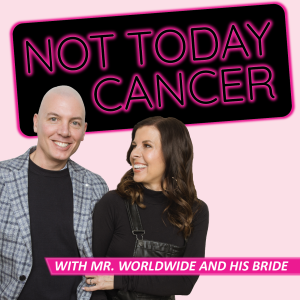
Not Today Cancer
https://mrworldwideandhisbride.libsyn.com/rssEpisode List
Medical Menopause After Breast Cancer: What Nobody Tells You (And How to Actually Get Through It)
Medical menopause after a breast cancer diagnosis is nothing like the gradual kind. When your ovaries are shut down with Zoladex injections or removed through surgery, your estrogen doesn't decline over years — it drops by up to 90% overnight. And most women are sent home with a pamphlet and a six-week follow-up. In this episode, Jen shares her personal experience — four months on Zoladex injections followed by a bilateral oophorectomy — and breaks down everything your doctor didn't have time to explain: what medical menopause actually does to your body and brain, why it hits so much harder than natural menopause, and every strategy she uses to get through it. What we cover: Why medical menopause is so different from natural menopause — and why the symptoms are more intense The full symptom picture: hot flashes, night sweats, vaginal dryness and atrophy, joint pain, brain fog, sleep disruption, bone loss, hair changes, and the mood shifts nobody warns you about Why your mood changes are not a character flaw — and what's actually happening in your brain chemistry Diet as medicine — what to add (phytoestrogens, anti-inflammatory foods, fiber, protein) and what to reduce (sugar, alcohol, processed foods) Exercise — the specific types that protect bone density, support mood, and reduce cardiovascular risk Vaginal estrogen — the research most women have never seen, including the 2023 JAMA Oncology study (49,237 patients) and the 2025 PubMed meta-analysis (24,060 patients), and how to bring this conversation to your doctor Supplements that actually help: magnesium, Vitamin D3+K2, Omega-3s, ashwagandha Sleep — how to set your bedroom up for success and protect the one thing that affects everything Mindset, emotional support, journaling, and when it might be time to talk to your doctor about more support Research mentioned: 72% of breast cancer survivors experience hot flashes and night sweats more severe than women without cancer — Endocrinology Advisor Over 70% of postmenopausal breast cancer survivors face genitourinary syndrome of menopause — AUA News 2024 JAMA Oncology 2023 (49,237 patients): vaginal estrogen users showed 23% LOWER breast cancer mortality risk PubMed meta-analysis 2025 (24,060 patients, 8 studies): vaginal estrogen not associated with increased recurrence — odds ratio 0.48 Abrupt surgical menopause associated with more significant mood symptoms — MGH Center for Women's Mental Health Resources + links mentioned: Not Today Cancer Inner Circle (weekly Thursday calls — all virtual): [JOIN HERE] Magnesium Breakthrough by Bioptimizers Protein powder (third-party tested with Icelandic Spirulina): [Use HELLO10 for $10 off] Hair toppers — DM Jen on Instagram @jendelvaux for info Jen's Blueprint: jendelvaux.com/blueprint Disclaimer: Nothing in this episode is medical advice. Jen is sharing her personal experience and research. Always consult your physician or oncology team before making any changes to your treatment or supplement protocol.
Peptides, GLP‑1 & Breast Cancer: What Women Need to Know with Dr. Paige
In this episode, Jen sits down with osteopathic physician and women's health expert Dr. Paige to do a deep dive on peptides—with guardrails. They break down what peptides actually are in simple language, how they work as signaling molecules in the body, and why they're more of a "cherry on top" than a shortcut when foundations like sleep, nutrition, blood sugar, and muscle aren't in place. They also unpack the hype around microdosing GLP‑1—why some women are using it for energy, body composition, metabolic health, and even after breast cancer—and what the emerging research and clinical experience really show so far. Jen shares her own experience microdosing GLP‑1 under Dr. Paige's care after a breast cancer diagnosis, and they discuss how insulin, inflammation, cardiovascular health, and brain health all intersect here. You'll hear a candid conversation about: What peptides are and how they differ from hormones. Why so many women in perimenopause and menopause are curious about peptides for energy, weight, and inflammation. The dangers of online buying, "peptide stacking," and DIY dosing from TikTok, discount sites, and gray‑market vials. The difference between FDA‑approved drugs, reputable compounded medications, and unregulated "research" peptides sold directly to consumers. What microdosing GLP‑1 really means, potential benefits, and what's still unknown. Why blood work, testing, and your personal "health philosophy" matter before starting any peptide. A green / yellow / red framework for women with a history of breast cancer: which peptide patterns feel more comfortable, which require extreme caution, and which are a hard no outside research settings. If you've ever thought, "Should I be on a peptide? Am I missing out?" this is the episode you listen to before you inject anything into your body. Connect with Dr. Paige: Website: www.gozawellness.com IG https://www.instagram.com/goza.wellness https://www.instagram.com/dr.paige.do Free Hormone and Peptide Guide! https://signaturepc.ac-page.com/wrwr-hormone-peptide-guide Connect With Jen: Instagram: @jendelvaux BrocElite — 20% off with code NOTTODAYCANCER: mara-labs.com/nottodaycancer Join the Not Today Cancer Inner Circle: JOIN HERE Join the FREE Not Today Cancer here: REQUEST TO JOIN HERE Learn more: My WEBSITE EMAIL ME: jen@jendelvaux.com Leave a Review: If this episode gave you something today, a 5-star review on Apple Podcasts takes 30 seconds and helps more women find this show. Jen reads every single one.
Crunchy, Faithful & Facing Cancer: How Natalie Frey Did It Her Way — Lobular Breast Cancer, Chemo Detox Secrets & Life After Treatment
Natalie Frey is 38 years old, a homeschooling mama, woman of deep faith, and my kind of person — fully crunchy. In November 2024 she was diagnosed with lobular breast cancer. She didn't abandon who she was when the diagnosis hit. She leaned in harder — to her faith, her holistic practices, her community. She finished treatment in October 2025 and is now doing the real work of healing. Follow Natalie on Instagram: @themomwifeandchristlife — DM her anytime, she responds and will help however she can. Join my FREE Not Today Cancer community on Facebook: Click here to join BrocElite — 20% off with code NOTTODAYCANCER: mara-labs.com/nottodaycancer What We Cover How her cancer was discovered at a pap smear — not a mammogram or self-exam What lobular breast cancer is and why it hides on imaging (1 in 5 breast cancer cases is lobular) Her staging: anatomical 3A, prognostic 1B, grade one multifocal tumors Why she waited 6–7 weeks before starting chemo to do her due diligence The detox tools she kept up during chemotherapy — with her oncologist's blessing The little-known tip: requesting an extra liter of saline after your infusion Her four pillars of post-treatment healing: sleep, stress, exercise, and diet Healing osteopenia naturally The blessings she can now see on the other side Resources & Links Nothing shared here is medical advice. Always consult your oncologist before starting or changing any protocol. Natalie's Shop: shopmy.us/shop/themomwifeandchristlife — everything is linked there Sleep CURED Serenity Gummies — takes the edge off, relaxes you (sleep is a bonus side effect) CURED Dream Gummies — fall asleep, stay asleep, restorative sleep Discount code: THEMOMWIFEANDCHRISTLIFE for 15% off your first order Magnesium glycinate — nightly Detox Bath (used weekly during chemo — same day as infusions) Equal parts of each, water as hot as you can bear, 20 minutes minimum, then rinse: Magnesium Flakes Aztec Indian Healing Clay Baking Soda Other Detox Tools Ionic Foot Bath (~$120) Castor Oil Pack on Liver — Queen of Thrones brand (Amazon) — 4–5x per week Skincare During Chemo Nu Skin Lumi Spa — used every evening, credits this with keeping her skin healthy through chemo Luminance Skincare — non-toxic, gentle enough during treatment Discount code: NATALIE for 15% off Radiation Skin Care Miaderm Fragrance-Free — used 2–3x daily; apply immediately after treatment (never before), one tube lasted 6.5 weeks Discount code: RELIEF15F for 15% off Boiron Calendula Cream — used this until Miaderm arrived Hair Regrowth Nu Skin Collagen — oncologist approved 2 weeks after last infusion; Natalie credits it with fast regrowth (also great for skin) Scriptures That Carried Natalie Through Isaiah 41:10 Jeremiah 29:11 Connect Natalie: On IG @themomwifeandchristlife — DM her, she will respond Jen: coachjennyd@gmail.com Not Today Cancer podcast: Apple Podcasts | Spotify | Goodpods Community: Not Today Cancer — The Inner Circle Loved this episode? Leave a 30-second review — it helps more women find this community. Share this with your person. You know who needs it.
Marriage, Intimacy & Cancer: Two Survivors Tell the Truth About What It Really Does to a Relationship
Most cancer couples talk about the hard stuff behind closed doors. Today, Jen and her husband Darren say it out loud. Two cancer diagnoses, one marriage, and the most honest conversation they've ever recorded together. In this episode Jen is joined by her husband Darren — who is living with Grade 4 Astrocytoma brain cancer and defying statistics every single day — for a raw, real conversation about what cancer actually does to a relationship. What You'll Hear in This Episode: What it's like when both people in a marriage are fighting cancer at the same time The role reversals, the fear, and the conversations most couples avoid having Intimacy after cancer — the honest conversation nobody is having publicly The research-backed reason your relationship can literally affect your survival odds What cancer took from Jen and Darren's marriage — and what it gave them that nothing else could Stats Referenced in This Episode: Median survival for Grade 4 brain cancer: 12–18 months. Less than 10% of patients survive five years — MD Anderson Cancer Center Being married is associated with better cancer survival outcomes — in some cancers, the survival benefit of marriage is larger than the published survival benefit of chemotherapy — Journal of Clinical Oncology About Darren: Darren Delvaux is Jen's husband and a Grade 4 Astrocytoma brain cancer survivor who has defied every statistical expectation. He joins the Not Today Cancer podcast periodically to share the perspective no one else can — what it looks like to love someone through cancer while fighting your own battle at the same time. Connect With Jen: Instagram: @jendelvaux Join the Not Today Cancer Inner Circle: (JOIN HERE) Get the Blueprint: jendelvaux.com/blueprint Mentioned in This Episode: The Not Today Cancer Blueprint — Jen's complete system for rebuilding life after a breast cancer diagnosis: jendelvaux.com/blueprint Leave a Review: If this episode gave you something today, a 5-star review on Apple Podcasts takes 30 seconds and helps more women find this show. Jen reads every single one.
Breast Cancer Survivorship: The Honest Truth About Life After Treatment (No One Tells You This)
Everyone talks about surviving cancer. Nobody talks about what comes after. In this episode, Jen gets honest about the emotional, physical, and identity shifts that happen when treatment ends — and why finishing treatment didn't feel like the finish line everyone said it was. If you've ever felt like you were expected to just be grateful and move on — this episode is for you. What You'll Hear in This Episode: Why the day treatment ends can feel like the hardest day — not the best one What the "survivorship cliff" is and why so many women fall off it silently The research-backed truth about scanxiety — and why it doesn't get easier with time How to grieve the woman you were before cancer without guilt Why "you're so strong" can be the most isolating thing someone says to you The non-toxic living shifts and integrative health habits Jen added when the appointments stopped A permission slip for every woman who isn't fine — even years later Stats Referenced in This Episode: Nearly 50% of women with breast cancer experience depression, anxiety, or both in the first year after diagnosis — British Medical Journal Between 1 in 3 and 2 in 3 cancer survivors experience moderate to severe scanxiety — and research shows it does not fade with time — Psycho-Oncology Journal 1 in 4 cancer patients will experience clinical depression — American Cancer Society Connect With Jen: Instagram: @jendelvaux Join the Not Today Cancer Inner Circle: JOIN HERE Join the FREE Not Today Cancer here: REQUEST TO JOIN HERE Learn more: My WEBSITE EMAIL ME: jen@jendelvaux.com Leave a Review: If this episode gave you something today, a 5-star review on Apple Podcasts takes 30 seconds and helps more women find this show. Jen reads every single one.
You may also like




Get this podcast on your phone, Free


Create Your Podcast In Minutes
- Full-featured podcast site
- Unlimited storage and bandwidth
- Comprehensive podcast stats
- Distribute to Apple Podcasts, Spotify, and more
- Make money with your podcast
