Knowledge Distillation Podcast
https://ask-y.ai/knowledge-distillation-podcast/feed/podcast-feedEpisode List
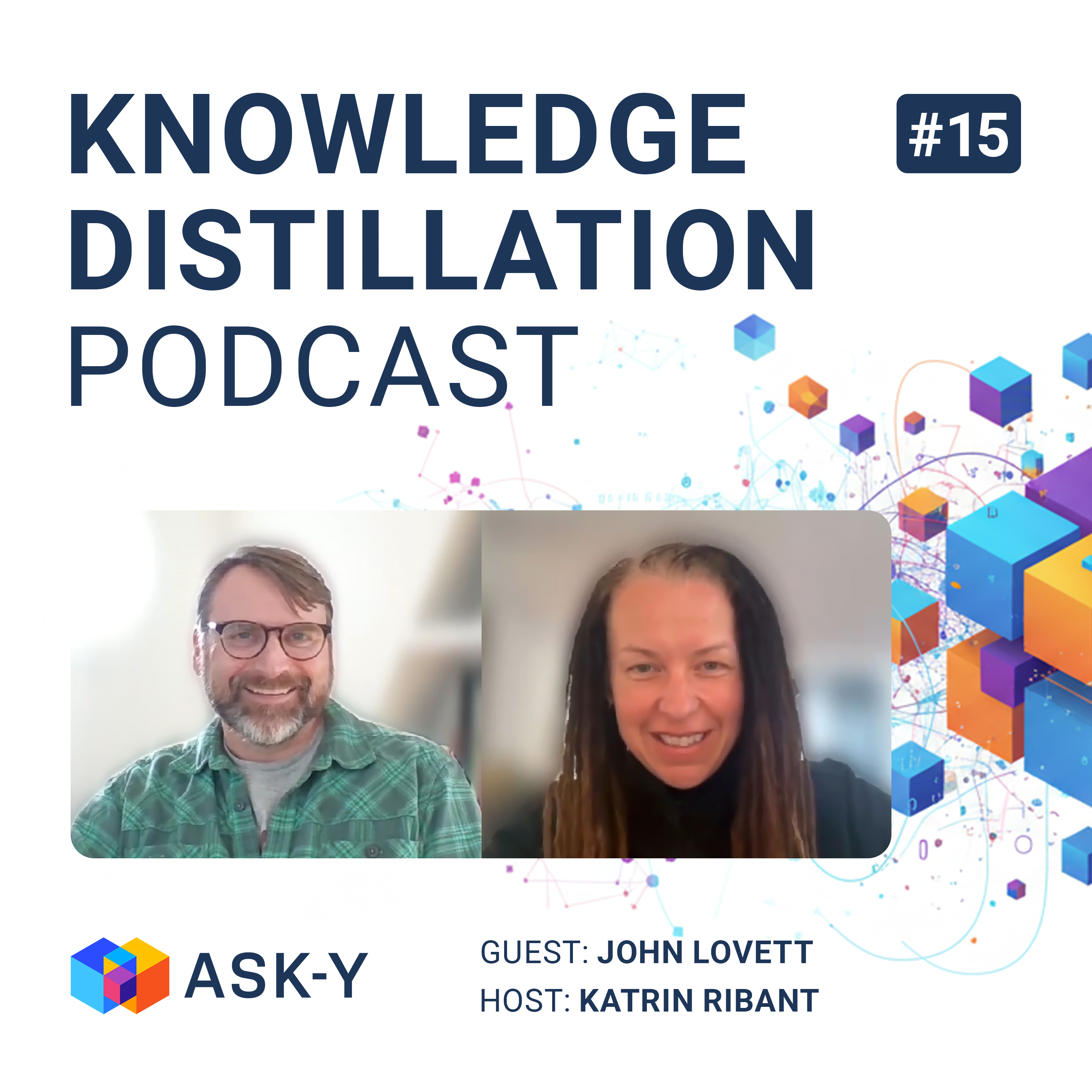
15# John Lovett (Seer Interactive, Web Analytics Demystified, Digital Analytics Association, Forrester, Jupiter Research) on What Makes an Analyst an AI Analyst, Detecting Agentic Browsers in Your Traffic, and What 5,000 Olympic Prompts Reveal About How L
John Lovett has seen every chapter of digital analytics from the inside. He started as a marketer curious about how messages reach people, moved through analyst roles at Jupiter Research and Forrester, co-founded Web Analytics Demystified with Eric Peterson, served as president of the Digital Analytics Association during the pivotal renaming from “web” to “digital” analytics, and is now VP of Analytics & Insights at Seer Interactive, where he’s building AI into every layer of the analytics practice. In this episode, John and I dig into what actually makes an analyst an AI analyst – and his answer surprised me. It’s less about new skills and more about bringing AI into the curiosity and critical thinking that always made someone a good analyst in the first place. He walks us through how Seer identified 15 core deliverables and systematically disrupted each one with AI, creating a team that starts every task with an agent rather than a blank template. We then dive deep into agentic commerce – the emerging reality of AI agents that browse, compare, and buy on behalf of consumers. John shares what Seer is learning about distinguishing human from bot traffic (spoiler: humans do “clicky clicky scrolly scrolly,” agents do surgical strikes), why log file analysis is making a comeback, and his hypothesis on which product categories will see agentic purchasing first. Finally, John walks us through his groundbreaking GEO research using the 2026 Winter Olympics as a case study – running 5,000 prompts across every major LLM to understand how models find, trust, and cite brands. The results reveal a fascinating divide between models that search the web and those that hit what he calls “the binary cliff.” Plus, we talk about his new book, The New Big Book of KPIs, and why the best time to start with AI would have been yesterday – but the next best time is today. All episodes on our website: www.ask-y.ai/knowledge-distillation-podcast Learn more about ASK-Y: www.ask-y.ai
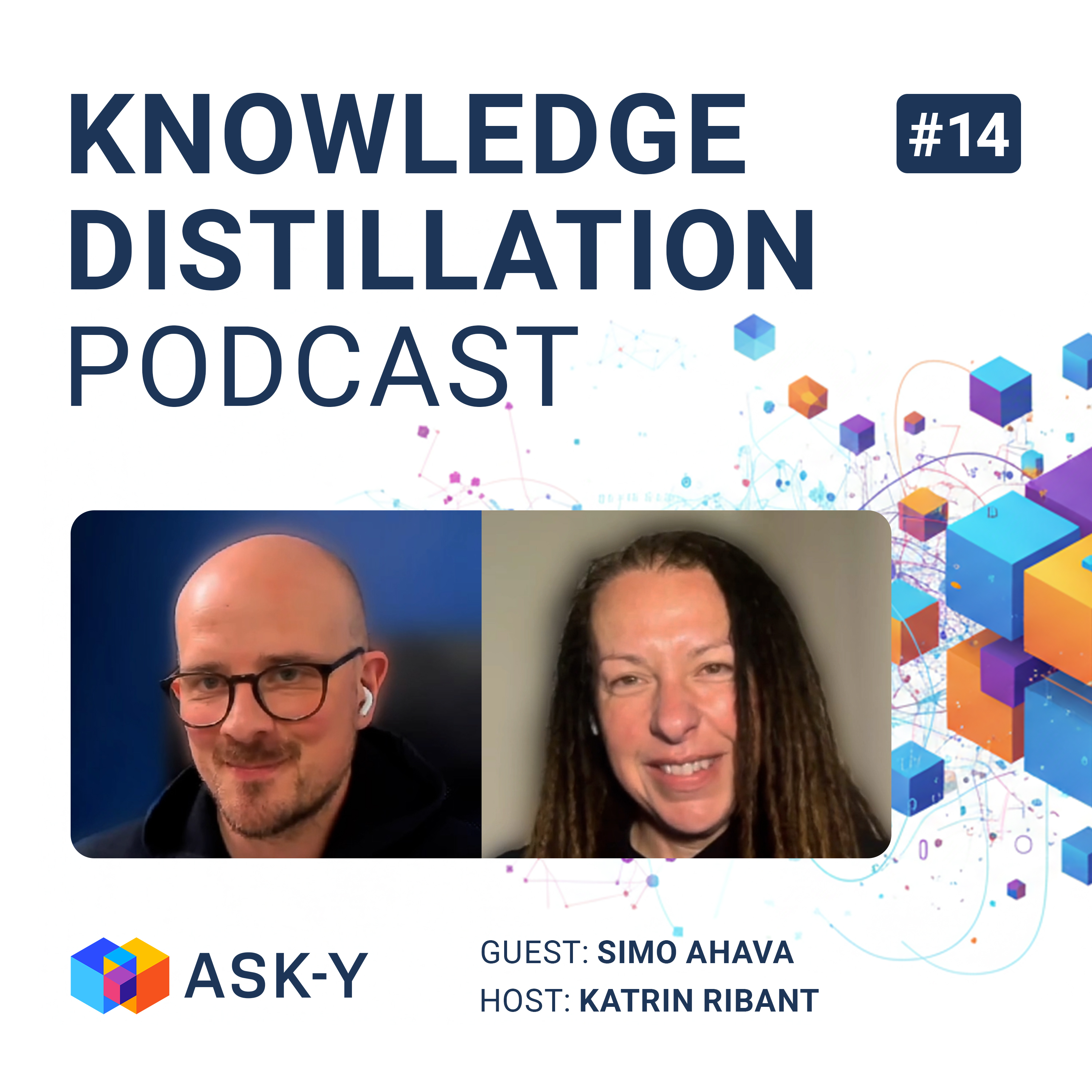
14# Simo Ahava (Co-founder: Simmer, Partner: 8-bit-sheep, Co-host: Standard Deviation Podcast) on Teaching Technical Marketers When AI Removes the Incentive to Learn, Why Critical Thinking Is the Skill AI Can’t Replace, and What Agentic Commerce Means for
In this episode of Knowledge Distillation, Katrin Ribant speaks with Simo Ahava – quite simply the person the entire digital analytics and technical marketing community turns to when they need to understand how things actually work. Simo has been writing about web analytics, tag management, and the Google marketing stack since 2010, and his blog at simoahava.com has become the definitive technical reference for anyone implementing Google Analytics or Google Tag Manager. A Google Developer Expert in both platforms from 2014 to 2025, a multiple Digital Analytics Association award finalist, and one of the most generous knowledge sharers the industry has ever seen – if you’ve ever asked a question on Measure Slack, there’s a good chance Simo answered it, thoughtfully, for free. He co-founded Simmer with his wife Mari Ahava, an online learning platform for technical marketers that has become the gold standard for courses on server-side tagging and BigQuery. He is partner and co-founder at 8-bit-sheep, a Helsinki-based digital services consultancy, and co-hosts the Standard Deviation Podcast with Juliana Jackson. The conversation opens with what Simo calls the educator’s dilemma: AI makes it trivially easy to get answers, which removes the incentive for deep learning. His students take course content to an LLM, get a conflicting answer, and bring the contradiction back – without the baseline knowledge to judge which is correct. Katrin pushes back: practitioners doing real analytics work need to understand fundamentals like context windows and attention mechanisms. They land on a distinction – Simo’s concern applies to learners seeking quick answers, Katrin’s to practitioners maintaining context continuity across complex workflows. The episode then pivots to agentic commerce. Simo draws a direct line from his data layer and server-side tracking expertise to the challenge of designing websites for AI agent access. Tag management systems have let organizations survive with poorly structured data for years. Agentic commerce breaks that – agents need structured data by design, not retroactive patches. Simo warns against over-optimizing for agents at the expense of human UX, and raises the unsolved measurement problem: how do you track agentic traffic when AI agents have no reason to identify themselves? All episodes on our website: www.ask-y.ai/knowledge-distillation-podcast Learn more about ASK-Y: www.ask-y.ai
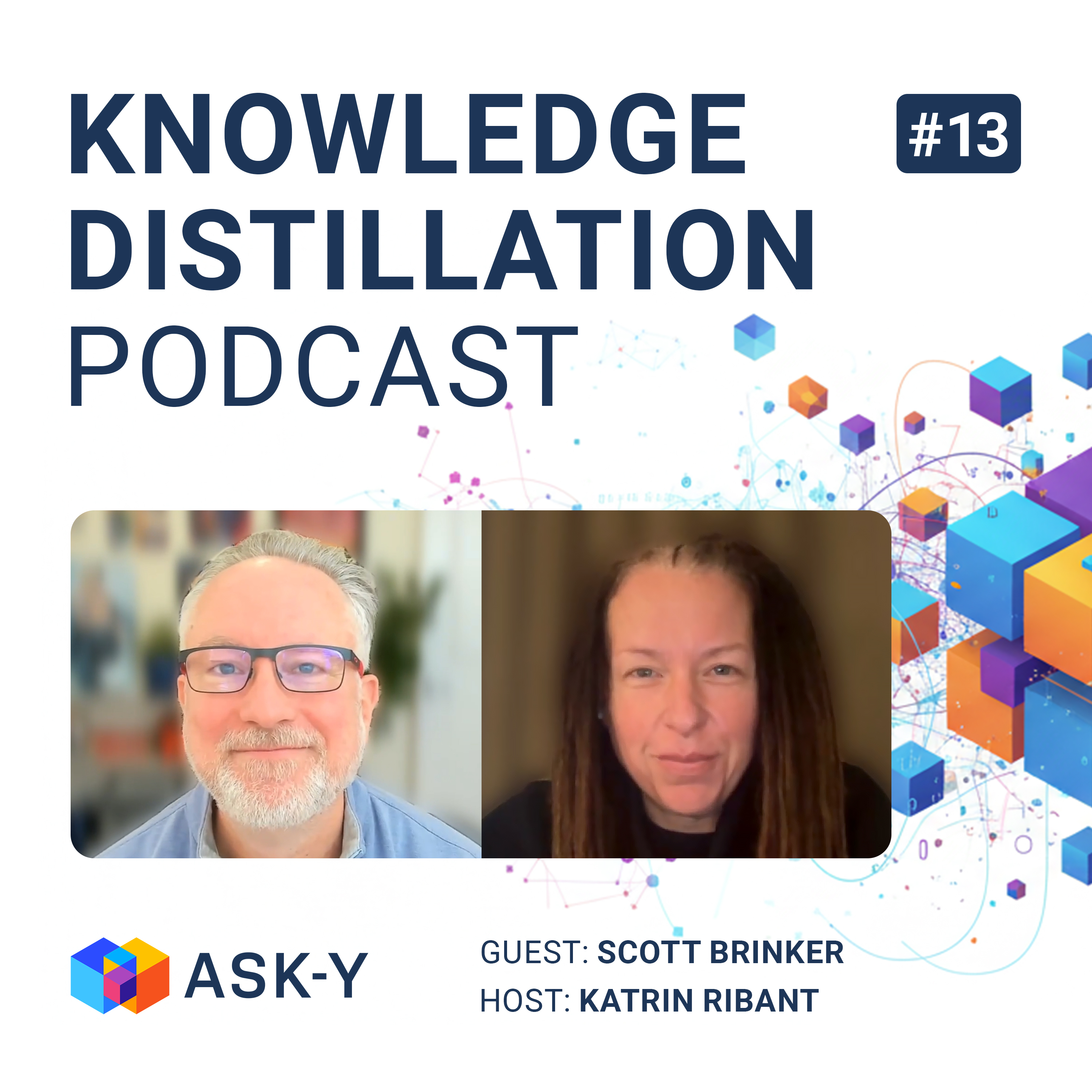
13# Scott Brinker (Creator of the MarTech Landscape and Chief MarTech, HubSpot, Ion Interactive) on the SaaS Apocalypse, Why Software Isn’t Dead but Its Moats Are Changing, Why Context Engineering Is the Real Analyst Job Now, and Why Technology Changes Ex
In this episode of Knowledge Distillation, Katrin Ribant speaks with Scott Brinker – the creator of the Marketing Technology Landscape Supergraphic, the map of the martech industry that started with 150 logos in 2011 and now tracks over 14,000. Scott spent eight years as VP of Platform Ecosystem at HubSpot, where he built out their partnership and integration ecosystem. He holds degrees from Columbia and MIT Sloan, co-authors the annual State of Martech report with Franz Riemersma, and now works full-time as an independent martech analyst through Chief MarTech. Katrin still drinks her coffee from a mug Scott gave out a decade ago – the one with snails at a boardroom table and the tagline: technology changes exponentially, organizations change logarithmically. Together they dig into the so-called SaaS Apocalypse – triggered by AI-native tools lowering the barrier to building software – and land on a nuanced take: the market overreacted in the short term, but the long-term disruption to SaaS business models is real. The risk isn’t that customers will vibe code their own CRM; it’s that a thousand new companies will. Scott introduces his framework of systems of truth and systems of context – an evolution of the classic systems of record and systems of engagement – and explains why delivering the right information, to the right person or agent, at the right moment is the hardest and most valuable problem in martech today. Katrin connects this directly to Ask-Y’s thesis: that the central challenge in analytics isn’t the tools, it’s maintaining context continuity across every step of the workflow – from data connection through transformation to stakeholder output. The conversation goes deep on Scott’s framework of three types of AI agents in marketing: agents for marketers (internal productivity), agents for customers (brand-controlled interactions like AI-powered chatbots and SDRs), and agents of customers (the disruptive category – AI assistants that work for the buyer, not the seller). They explore how agents of customers are forcing a rethink of everything from SEO to email marketing to e-commerce, and Katrin lays out her thesis that agentic commerce will trigger a workstream comparable to mobile platforming, the GA4 migration, and a fundamental shift in customer relationships – all at once. Scott agrees and adds his prediction that agentic email is the next major disruption most marketers aren’t preparing for. The episode closes on the AI analyst role itself: Scott argues that hands-on experience with AI tools is non-negotiable, that understanding code remains critical even when you’re not writing it, and that the only way to build the mental model required for this era is through consistent, daily practice. His advice: the only way out is through. All episodes on our website: www.ask-y.ai/knowledge-distillation-podcast Learn more about ASK-Y: www.ask-y.ai
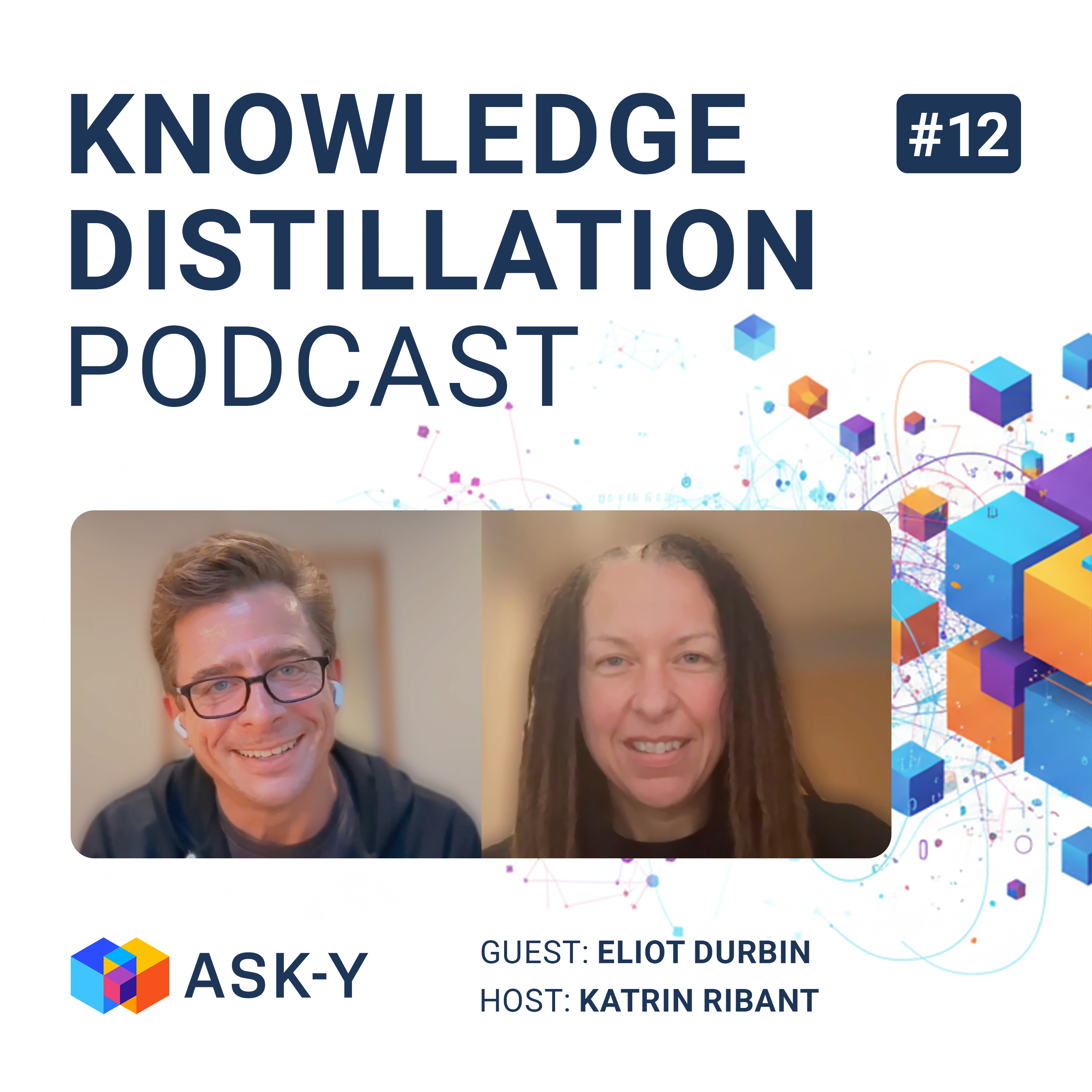
12# Eliot Durbin (General Partner, Boldstart Ventures – Clay, Snyk, Crew AI, Wiz, Kustomer, Keycard…) on the SaaS Apocalypse Hype, Betting on People Over Products, What Actually Compounds at Inception and the Skills That Survive Every Cycle
In this episode of Knowledge Distillation, Katrin Ribant speaks with Eliot Durbin, General Partner at Boldstart Ventures – one of enterprise software’s most active inception-stage funds, with a portfolio that includes Clay, Snyk, Wiz, Crew AI, Kustomer, and Keycard, among others. Boldstart was founded in April 2010 with a $1M first fund and pioneered what Eliot calls “inception investing”: backing technical founders on the strength of a person and a thesis – before a product, before a pitch deck, sometimes before there’s even a market. Katrin and Eliot have known each other for 15 years, with Boldstart backing Ask-Y at its earliest stage. Together they unpack the so-called SaaS Apocalypse – the trillion-dollar collapse in software market cap triggered by AI-native competition – and whether the hype matches the reality. Eliot argues it doesn’t: software isn’t dying, it’s evolving, just as it did through the cloud and mobile revolutions. The companies that move fast and go AI-native will survive; those that don’t will go the way of the ones that missed mobile. The conversation goes deep on what actually compounds at inception in a world where anyone can vibe-code a prototype in a week, how moats are being redefined around trust and interaction data, and why speed remains the only real advantage at the earliest stage. They also dig into agentic commerce – the wave forcing brands to re-architect their websites and data layers for both human and AI agent audiences – and what that means for analytics teams. The episode closes on the AI analyst role itself: Eliot draws a direct parallel to how Clay created the GTM engineer out of rev ops, arguing the same elevation is coming for analysts – not replacement, but a shift to higher-order reasoning. His single best piece of advice for anyone navigating this moment: play with as many tools as you can. All episodes on our website: www.ask-y.ai/knowledge-distillation-podcast Learn more about ASK-Y: www.ask-y.ai
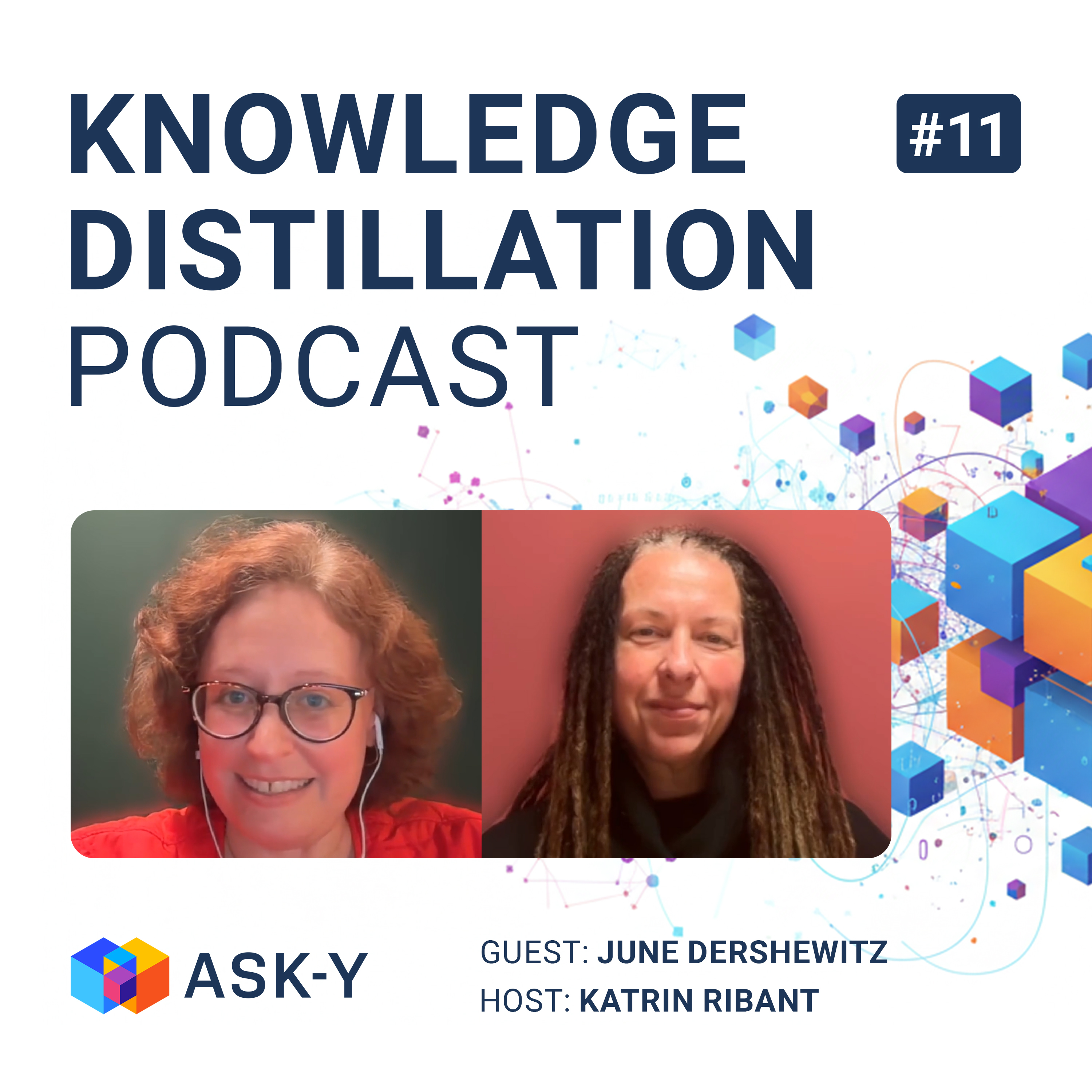
11# June Dershewitz (Co-founder: InvestInData, Web Analytics Wednesdays, Former President: Digital Analytics Association) on 25 Years of Watching Analysts Reinvent Themselves, Why Data Leaders Are Betting Their Own Money on the AI Stack, and What Commun
In this episode of Knowledge Distillation, Katrin Ribant talks with June Dershewitz – a pioneering analytics leader who has been at the center of the data community for over two decades. June started her career in web analytics in 1999, co-founded Web Analytics Wednesdays (the industry gathering that launched a thousand local analytics communities), served as President of the Board of the Digital Analytics Association, and has led analytics and data governance teams at some of the largest media and entertainment platforms in the world. Now, as co-founder of InvestInData – a collective of 50+ Chief Data Officers and VPs of Data who angel invest in early-stage data startups – she sits at the unique intersection of practitioner, community builder, and investor. Together they explore what 25 years of analytics evolution teaches you about the current AI transformation, how angel investing from the practitioner seat gives you a fundamentally different lens on which AI tools will actually matter, and why the community-building instinct that drove Web Analytics Wednesdays is more relevant now than ever as analysts figure out what the AI Analyst role actually looks like. June shares her perspective on scaling data teams through every major disruption – from the early days of web measurement through big data, real-time analytics, and now agentic AI – and what she’s learned about the human skills that no technology cycle has managed to automate away. All episodes on our website: www.ask-y.ai/knowledge-distillation-podcast Learn more about ASK-Y: www.ask-y.ai
You may also like








Get this podcast on your phone, Free


Create Your Podcast In Minutes
- Full-featured podcast site
- Unlimited storage and bandwidth
- Comprehensive podcast stats
- Distribute to Apple Podcasts, Spotify, and more
- Make money with your podcast